|
GREAT CORMORANT FACTS |
Description
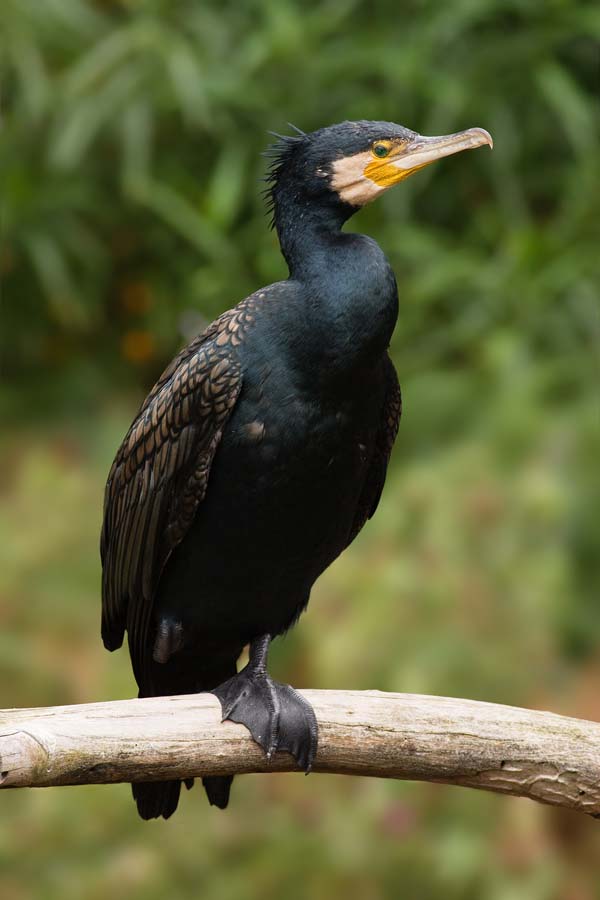
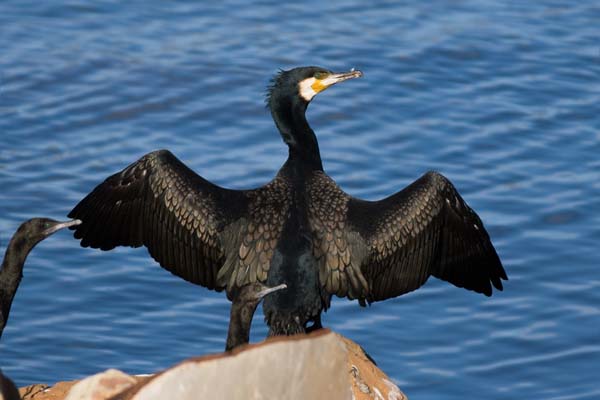
The Great Cormorant is mainly black except for some white and yellow on the face. There is a small white patch on each thigh during summer. The bill is grey and the legs and feet are black. Juveniles are similar to adults but are dark brown.
Other Names
Black Cormorant
Habitat
prefers permanent freshwater areas but is also found in coastal inlets and estuaries.
Food
The Great Cormorant feeds mainly on fish. Also eats crustaceans, aquatic insects and frogs. It catches its food by diving underwater.
Breeding
Great Cormorants nest in large colonies. The nest is a large structure made of sticks built in a low tree or on the ground. Three to four eggs are laid.
Range
Great Cormorants are found in North America, Europe, Africa, Asia, New Zealand, Papua New Guinea and Australia. In Australia it is most common in the south-east and south-west areas.

Credits:
Map is from Atlas of Living Australia website at https://biocache.ala.org.au licensed under Creative Commons Attribution 3.0 License.
Classification
| Class: | Aves | | Order: | Pelecaniformes | | Family: | Phalacrocoracidae | | Genus: | Phalacrocorax | | Species: | carbo | | Common Name: | Great Cormorant |
Relatives in same Genus
Black-faced Cormorant (P. fuscescens)
Little Pied Cormorant (P. melanoleucos)
Little Black Cormorant (P. sulcirostris)
Pied Cormorant (P. varius)
|
|