|
COMMON WOMBAT FACTS |
Description
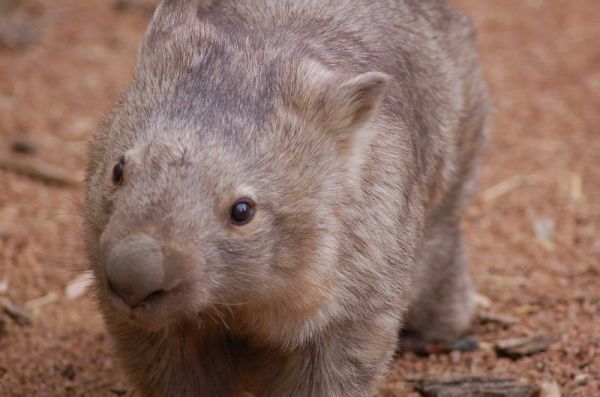
Wombats are stout marsupials and can weigh up to 36 kg. They have a large, blunt head and a short, neck. Their sharp claws and stubby, powerful legs make them great diggers. Wombats can live for up to 27 years in captivity. It digs burrows and tunnels in the ground for shelter and to escape from danger. Despite their slow appearance they can run quite fast.
Size
90cm to 120cm
Habitat
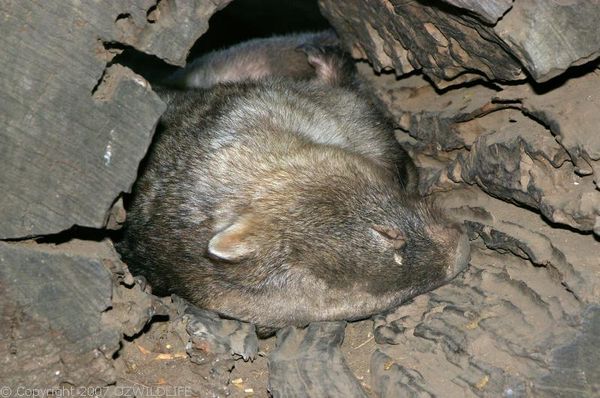
wet, partly forested areas on the coast, and on mountain ranges. Wombats live in burrows, preferring well-drained soils that are easy to dig in. The burrows can be up to 30m long, and several metres deep. Wombats spend most of the day in their burrow.
Food
native grasses such wallaby grass and kangaroo grass, sedges and roots of shrubs and trees. They cut their food with sharp front teeth which grow continuously
Breeding
Mating occurs between September and December, and usually results in one offspring. The newborn wombat, which weighs only 1 g and is less than 3 cm long crawls into the mother's pouch. This pouch faces backwards to stop dirt getting into it when mum is digging. The young wombat will stay in the pouch for between seven and 10 months.

Credits:
Map is from Atlas of Living Australia website at https://biocache.ala.org.au licensed under Creative Commons Attribution 3.0 License.
Classification
| Class: | Mammalia | | Order: | Diprotodontia | | Family: | Vombatidae | | Genus: | Vombatus | | Species: | ursinus | | Common Name: | Common Wombat |
|
|